History to the Stone, Future to the Wind: Détournements and Reappropriations of Monumental Heritage in Contemporary Artistic Practices in Bosnia and Herzegovina
Through the work of two contemporary artists, this presentation proposes to approach monumental heritage as a material to be worked with: an inheritance upon which artistic practices can act, which they can manipulate and reconfigure — with humour, tenderness, or persistence. It focuses on artistic gestures from the Balkans and the post-Yugoslav space that reopen the debate around monumental heritage at a moment when the place of socialist and post-socialist legacies is being strongly questioned.
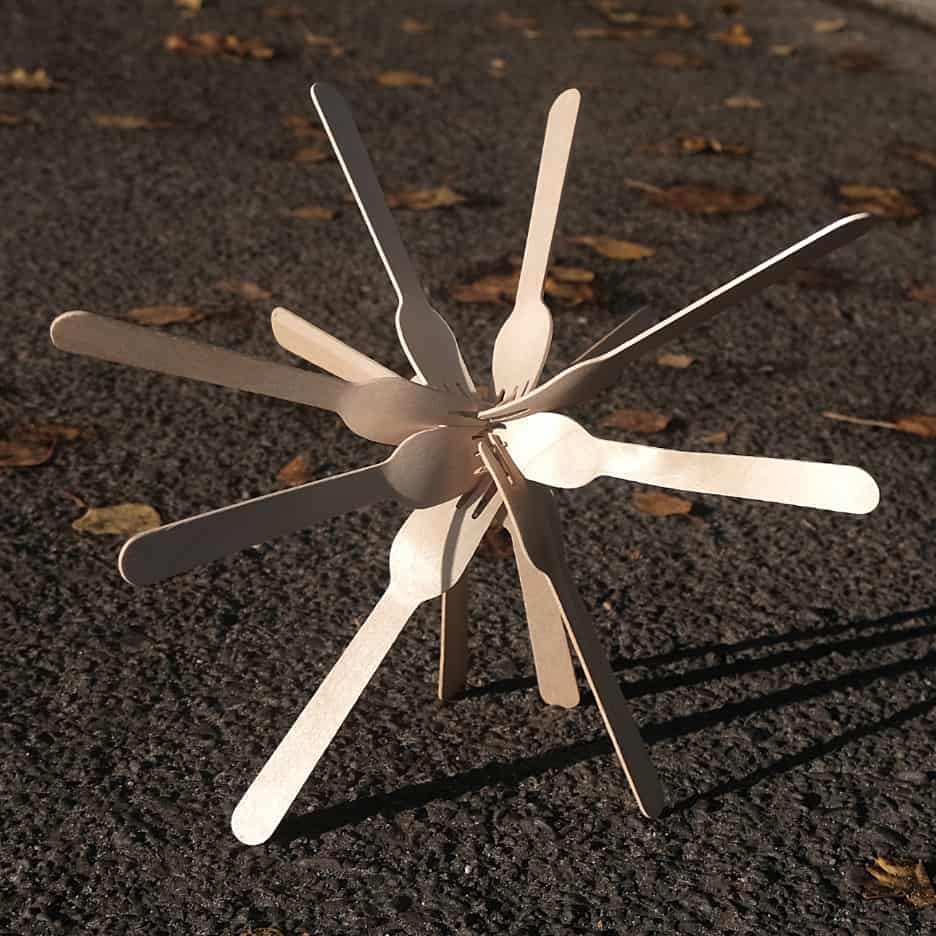
The discussion will open with a study of the work of Bojan Stojčić (Sarajevo, 1988): the performance series History to the Stone, Future to the Wind (2021) — which gives this presentation its title — will first lead us to consider performative interventions in which the body enters into dialogue with fragile architectures of memory, questioning their shifting symbolic charge and the volatility of this memory in the present; while the artist’s “proposals” in 36 Proposals for a Public Monument (2023), made from ordinary objects and waste collected by him in the streets of Berlin, will be read as sculptures that comment, with irony, on the fate of monumental heritage and, more broadly, on the promise of stability it is supposed to embody.
Finally, this presentation will raise the question of the boundaries of what constitutes heritage. Through Saša Tatić’s (Banja Luka, 1991) attempt to have her family home recognised as a historical monument, thus shifting the question of the public monument to the domestic scale, it will examine the contours of the notion itself, and what it reveals about transmission, personal attachments, and the institutional limits that may be associated with it.
Through these case studies, the aim is to reflect collectively on what monumental heritage “does” to the city and to those who inhabit it, and on the ways in which artistic gestures allow us to think through a form of instability: between histories anchored in stone and a range of situated experiences that are, by nature, impermanent.