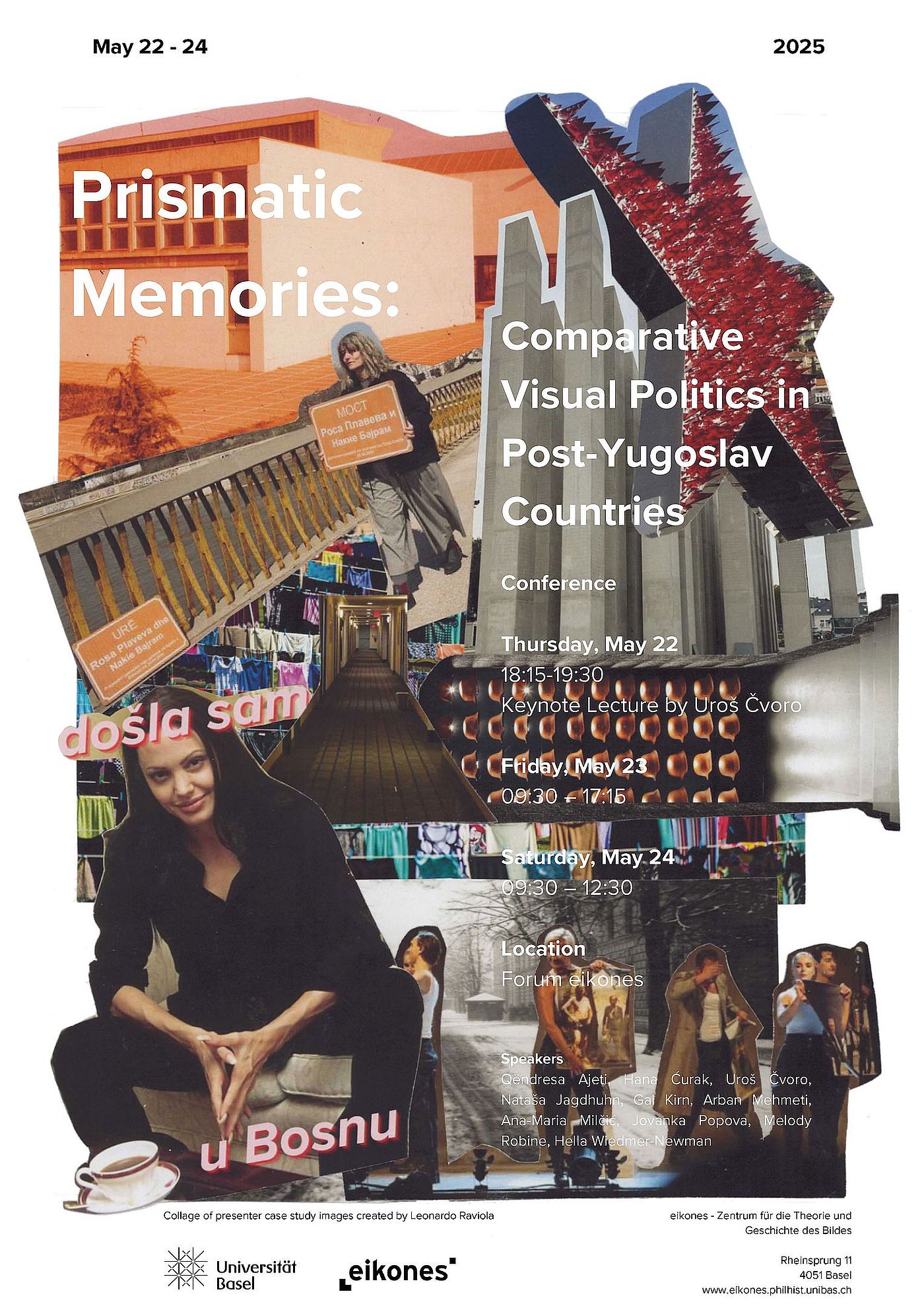
In mainstream discourse, visual memory projects in the countries that once constituted Yugoslavia are often discussed in isolation because of the specific local histories and mythologies they refer to. However, these ostensibly disparate histories, like the light beams refracted through a prism, in fact intersect in aleatory ways. Meanwhile the history of Yugoslavia that unites them all, can manifest quite differently, often influenced by the ideologies that characterized the Yugoslav wars of the 1990s.
This year [in 2025] in the context of the thirtieth anniversaries of both the Srebrenica Genocide on July 11, 1995, and the ratification of the Dayton Peace Agreement on November 21, 1995, presents an opportunity to explore the visual memory politics of post-Yugoslav countries – most of them still in a state of neoliberal “transition” – in relation to each other. Attending to the iconographic, narrative, aesthetic and art historical embeddedness of the various displays of memory, whether they take the form of a public memorial, a graffito, an exhibition or another kind of intervention, we are looking at instances of politics – both past and contemporary – becoming visible. We also ask after the infrastructures and administration of such memories, and their (geo)political entanglements. While we are interested in case studies that memorialize a range of historical events, we are especially interested in case studies from after 1999 and the last decade.
This conference assembles scholars working across disciplines to explore visual memory politics in post-Yugoslav countries. Each contributor presents a memory display – museum, temporary exhibition, play, graffito, monument, or public art intervention – foregrounding a different iconographic, narrative, aesthetic or art-historical tradition or tendency. We will also consider the infrastructure and administration of such memory projects. Together, we will examine instances when politics become visible.
Intervention: “Counter-Mapping Memory: Maja Bajević’s and Hristina Ivanoska’s Feminist Interventions in Urban Space”